


Sooner or later, two members of your community will fall out. It may start with a careless comment, an old grudge or a clash of personalities, and it can quickly drag others in. Left alone, a feud sours threads, forces people to pick sides and wears out your moderators. Handled well, it can end with mutual respect and a stronger sense that this is a place where disagreements are safe. This guide explains how to handle conflict between two members fairly and calmly.
Tell conflict from harassment
Not every dispute is the same. Disagreement and even heated argument between equals is normal. Harassment is different: it is targeted, repeated and one-sided. Before doing anything else, work out which you are dealing with. If one person is relentlessly targeting another, use the stricter approach in how to handle harassment in your online community. The mediation steps here suit disputes where both sides share some responsibility.
Step in early
Small conflicts grow when ignored. At the first signs, such as sharp replies, sarcasm or repeated back-and-forth, add a calm note: "Let's keep this about the ideas." Slow the thread, remove clear rule breaks and invite both people to pause. Early, light intervention often ends the matter before it hardens. Waiting until the thread is a war makes everything harder.

Move the conversation private
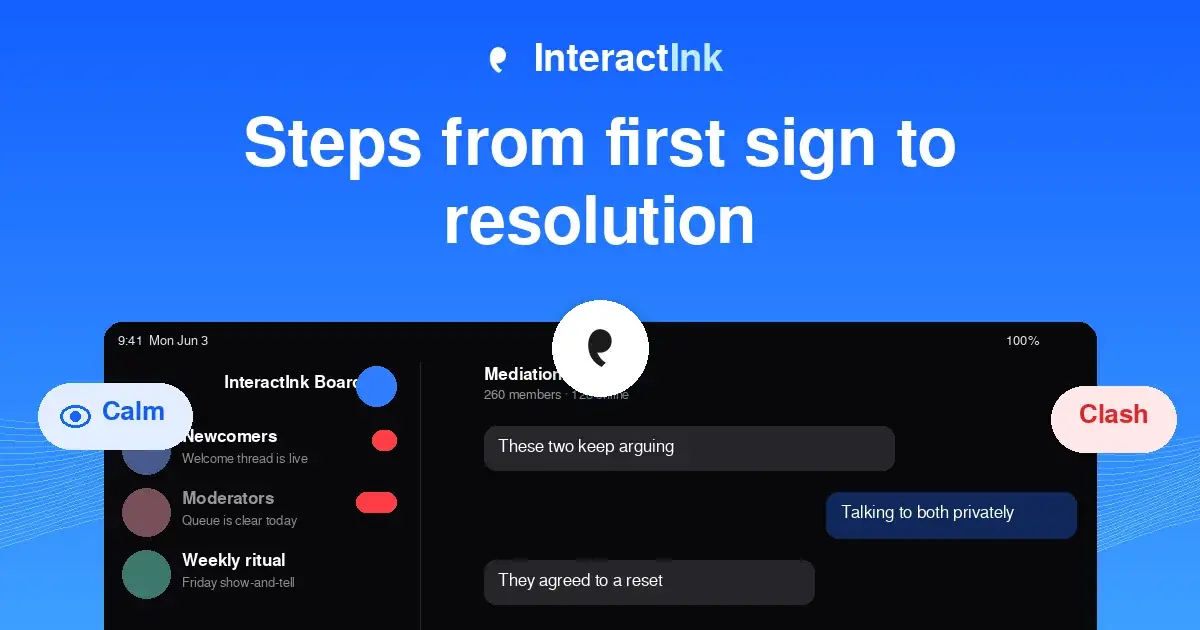
Public arguments reward drama, and each person feels they must save face before an audience. Take the discussion to private messages, and speak to each person separately. This lowers the temperature and lets people be honest without performing. Keep the public thread quiet by locking or tidying it if needed, and avoid naming the parties in public notes.
Listen to both sides
Ask each person to describe what happened and how they feel, without interrupting. Take notes, and look for the facts beneath the emotion. People often feel unheard more than wronged, and simply being listened to can calm them. Do not take sides in these first conversations, and avoid promises. Check for context, as described in how to moderate with empathy, because misunderstandings are frequent.
Review the evidence
Look at what was actually said and done. Read the threads, check reports and consult your moderation log. Compare the accounts against the record. Sometimes the story each person tells is honest but incomplete. Stay with facts: who broke which rule, and how. A calm look at the record protects you from being manipulated by whoever speaks first or loudest.
Find the shared ground
Most conflicts have something both people care about, such as the community's topic or a wish to be respected. Name it. Then propose a simple way forward: a mutual reset, an apology where one is due or an agreement to avoid each other's threads for a while. Offer options rather than commands, so the members feel some ownership of the solution.
Set clear expectations
Whatever the outcome, state what you expect next. Be specific: no personal comments, no replying to each other's posts for two weeks, report issues instead of responding. Explain the consequences if the agreement fails, in line with your normal ladder of actions, such as in how to deal with toxic members before they poison the room. Write the agreement down in a short note to each person.
Apply rules evenly
If one member clearly broke a rule, act on it, but do so by the same standards you would use for anyone. Do not go easier on the popular one or harder on the newcomer. Fairness matters most when members are watching for bias. For the more serious end of the ladder, see how to ban a member without starting a war.
Keep the community out of it
Other members will notice and may take sides, gossip or pile on. Ask people not to speculate, and share only a brief, neutral note if one is needed. Remind everyone that disputes are handled privately. If a larger quarrel spreads, the approach in how to moderate controversial topics without taking sides can help keep neutrality.
Follow up
A week or two later, check in with both people. Has the tension eased? Is the agreement holding? Thank them for their effort. If trouble returns, act on the plan you stated. Learn from the case, too: did a rule, a design choice or a cultural habit contribute? Use the lessons to improve guidelines.
Look after yourself
Mediation is emotionally draining, and being caught between two upset people is hard. Share difficult cases with a colleague, take breaks and do not carry the conflict home. A rested moderator mediates better, and signs of overload are covered in moderator burnout: warning signs and how to fix it.
The bottom line
Handling conflict between members means telling disputes from harassment, stepping in early, moving privately, listening to both sides and checking the facts. Find common ground, set clear expectations, apply rules evenly and follow up. With calm, fair mediation, a clash can end with respect restored, and the whole community learns that disagreements can be handled well.
Frequently asked questions
Should I always mediate?
Not always. If one person is targeting another, treat it as harassment and act on the rules instead.
What if one member refuses to talk?
Explain that you are happy to listen but that rules apply either way. Act on the record if needed.
Should I make them apologise?
Encourage it where an apology is due, but do not force one. A sincere agreement to move on is often enough.
When should I ban someone in a conflict?
When they break serious rules, ignore agreements or keep targeting the other person after warnings.
Loading comments…