

Online communities are places where people share joy, frustration and sometimes their hardest moments. A kind community can be a real comfort, while a careless one can add to someone's burden. You are not expected to be a therapist, and you should not try to be. But you can shape a space that treats wellbeing seriously, responds sensibly when members struggle and knows where its limits are. This guide offers practical, general ways to protect member mental health in your community.
Know your role and your limits
Start with honesty about what a community can and cannot do. You can offer kindness, listening and a sense of belonging. You cannot diagnose, treat or replace professional care. Say so clearly in your rules and welcome materials. Setting this boundary protects members, who may otherwise expect more than a volunteer-run space can give, and protects your team from taking on duties they are not trained for.
Build a culture of kindness
Most wellbeing protection comes from everyday culture. Reward empathy, model respectful disagreement and discourage mockery, pile-ons and contempt. A place where people feel safe being imperfect is healthier for everyone. The habits in how to build community culture on purpose and how to moderate with empathy support this directly.
Reduce harm from harsh behaviour
Harassment, bullying and constant negativity wear people down. Act quickly on them, protect those targeted and make reporting easy. Follow the steps in how to handle harassment in your online community. Members who feel safe are far better placed to take part and support each other.
Use content warnings sensibly
Some topics can be distressing, such as grief, illness or violence. Encourage members to use content warnings when sharing heavy material, and give them simple ways to do so. This lets people choose what they read and when. Keep the approach flexible, and avoid heavy-handed rules that stop people from sharing their experiences at all. The labelling approach in how to handle spoilers and NSFW content rules is a useful model.
Prepare a plan for distress posts
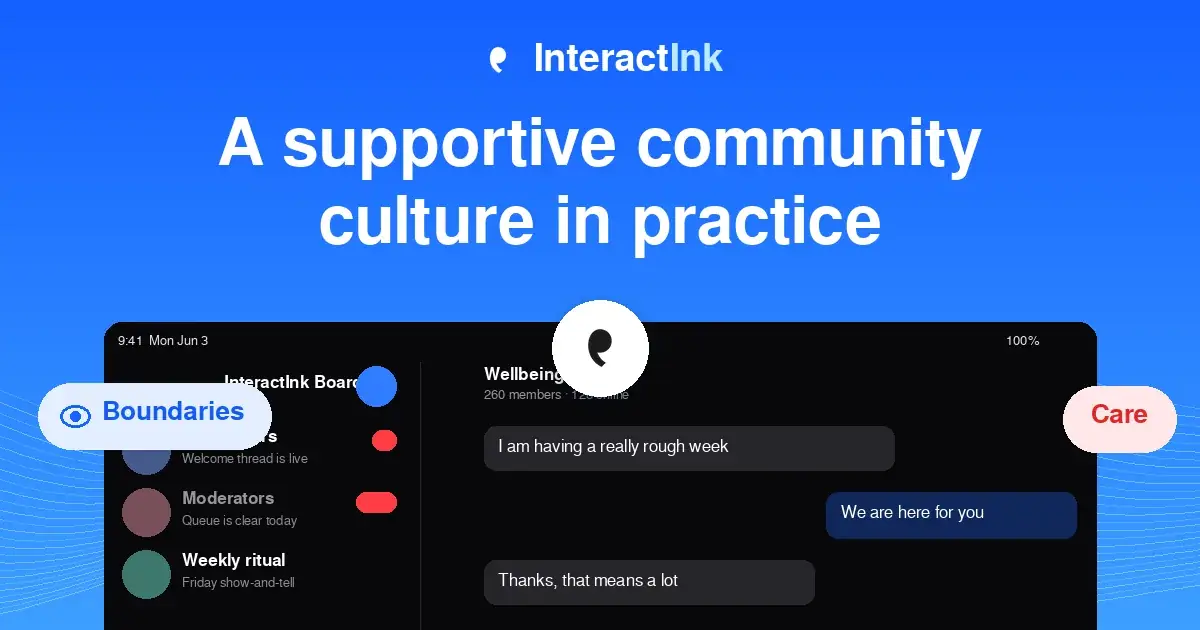
Sooner or later someone will post that they are struggling badly. Decide in advance how your team will respond. Keep replies calm, warm and brief, and acknowledge their feelings. Encourage the person to reach out to trusted people and appropriate professional or emergency services in their area, and share a short, vetted list of resources for your members' regions. If a member appears to be in immediate danger, urge them to contact local emergency services right away, and follow your team's agreed escalation steps. Do not offer advice you are not qualified to give.
Train your moderators
Moderators will face emotional moments, and they deserve preparation. Give them simple guidance: listen without judging, avoid promises, avoid diagnosing, point to proper help and know when to escalate to a colleague. Practise with examples. Include this in how to onboard new moderators in their first 30 days, so nobody meets a hard case unprepared.
Moderate support threads carefully
Threads where people share struggles need extra attention. Watch for unhelpful advice, judgement or competition over whose problem is worse. Gently remove harmful content and remind members to be supportive. Encourage replies that listen first. If some members take on a heavy caring role, thank them and remind them that they do not have to carry others alone.
Respect privacy
People who share vulnerable things need to trust that it will stay in the community. Do not share their posts elsewhere, and protect them from exposure. Let members choose pseudonyms, and give them tools to delete or edit their content. The principles in privacy-first communities: why it matters more every year are especially important here.
Watch for unhealthy patterns
A community can sometimes feed unhealthy habits, such as endless venting without support, obsessive checking or pressure to be always available. Notice when conversations seem to make things worse for people. Gently steer toward constructive talk and encourage breaks. Make it clear that leaving for a while is fine.
Look after your own team
Reading about other people's pain takes a toll. Set limits on hours, share difficult cases, encourage debriefs and allow moderators to step back from topics that affect them. Recognise the warning signs in moderator burnout: warning signs and how to fix it. Caring for the team keeps the care going.
The bottom line
Protecting member wellbeing means being honest about your limits, building a kind culture and acting against harsh behaviour. Use content warnings, plan for distress posts and point members to professional help. Train moderators, respect privacy and look after your own team. A community cannot cure anyone, but it can be a safe, humane place that makes hard times a little easier.
Frequently asked questions
Are moderators expected to give mental health advice?
No. They should listen kindly, avoid diagnosing and point people to appropriate professional or emergency help.
What should I do if someone seems to be in immediate danger?
Encourage them to contact local emergency services right away, and follow your team's escalation plan.
Should I ban discussion of difficult topics?
Usually not. Use content warnings and moderation so people can share while others can choose what to read.
How can I protect my moderators?
Limit exposure, share difficult cases, allow breaks and hold regular debriefs.
Loading comments…